
Water management in Nelson Tasman region
Welcome to Nelson (WIOG Conference 2025), here’s what you should know about our Local Water
So you're coming to Nelson for WIOG 2025. Good choice – though we may be slightly biased, being locals and all. While you're here discussing the finer points of water operations at the Trafalgar Centre, you might be curious about how we actually manage to keep the taps running and the toilets flushing in this corner of New Zealand.
Fair warning: we're not going to claim our infrastructure is groundbreaking or revolutionary. It's functional, it works most of the time, and it involves the usual collection of pipes, pumps, and treatment plants that you'd expect. But there are a few things worth knowing about how we've organized ourselves here in the Top of the South.
For what it's worth, we think our local operators are providing… local water done well
The Players: Because It Takes a Village (Or Four Organizations)
Nelson's water management is a bit like a group project where everyone actually shows up to the meetings. We've got four main players, each with their own patch:
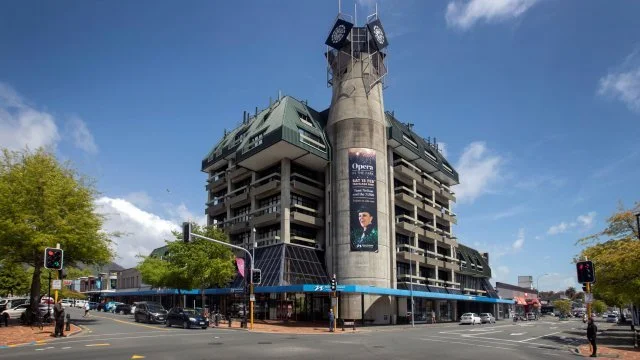
Nelson Council Building (yep, its the interesting looking one)
Nelson City Council looks after the city proper – about 50,000 people who expect water to come out when they turn the tap and disappear when they flush. They source water from the Maitai and Roding Rivers, which sound appropriately New Zealand-ish and are indeed real rivers that flow year-round (usually).
Tasman District Council manages the broader region with 19 different water schemes. Yes, nineteen. You might think they are being very thorough, but their patch is actually pretty big. With schemes out at Collingwood and all the way down in Murchison, their operations team is understandably busy.
The Nelson Regional Sewerage Business Unit is what happens when two councils decide to share wastewater treatment responsibilities. It's a 50:50 joint venture that proves inter-council cooperation is possible, even if it requires a lot of meetings and very clear agreements about who pays for what.
Waimea Water Limited operates the new Waimea Community Dam, which took about as long to build as most infrastructure projects do (... a little longer than originally planned) but is now providing water security for the Waimea plain irrigators and Richmond community.
And not to forget the Contractors who keep the place running day to day… we have teams at Nelmac (a Nelson CCO), Downer, and Fulton Hogan operating maintenance and operations contracts for different bits of kit.
The Infrastructure: Dams, Plants, and the Usual Suspects
Water Supply: From Mountain to Tap
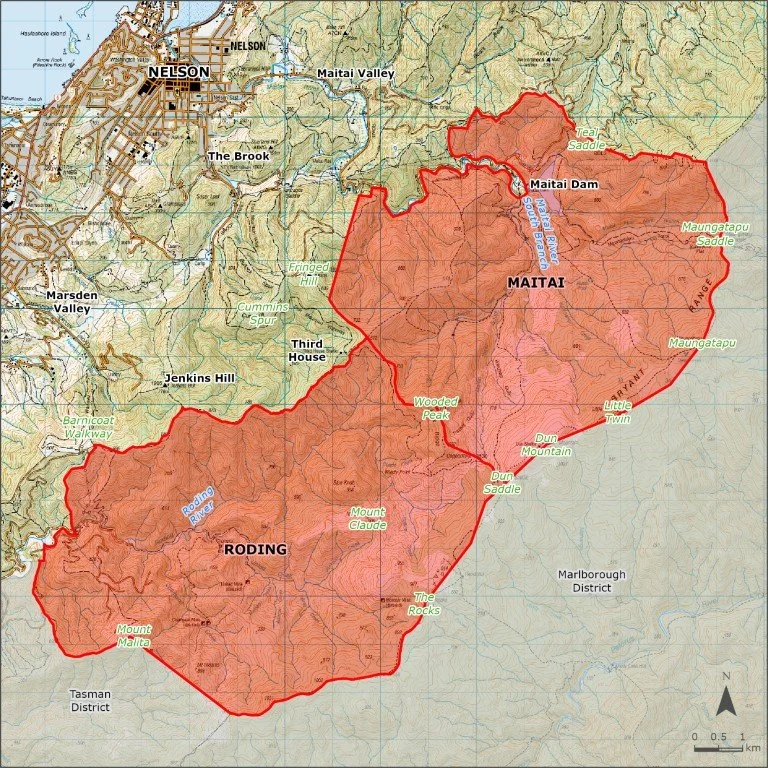
Maitai Dam and Roding Dam catchments
The Maitai Dam was built in 1987, back when shoulder pads were fashionable and people thought the internet was just a fad. It holds 4.1 million cubic metres of water, which sounds impressive until you realize that's what the region uses in about four months during summer. The dam deals with the usual challenges – seasonal turnover, iron and manganese showing up uninvited, and the occasional need to manage water releases to keep the river happy.
The Roding Dam deserves a mention as the elder statesman of local water infrastructure. Built in 1939 when concrete was apparently the solution to everything, this structure has been quietly doing its job for over 80 years. It even generates a bit of electricity on the side via an inline generator, because why waste perfectly good flowing water? The Roding proves that sometimes the old ways work just fine, even if they lack the bells and whistles of modern infrastructure.
The Waimea Community Dam is the new kid on the block, located in the Lee Valley near Brightwater. After what felt like decades of planning, environmental assessments, and the usual regulatory dance, it's finally nearing completion. The dam's job is to top up the Waimea and Wairoa rivers during dry spells and keep the aquifers recharged, which sounds straightforward until you consider the competing interests of urban growth, irrigation needs, and environmental flows. It's owned by Waimea Water Ltd (51% Tasman District Council, 49% local irrigators), proving that infrastructure partnerships can work when everyone has skin in the game.
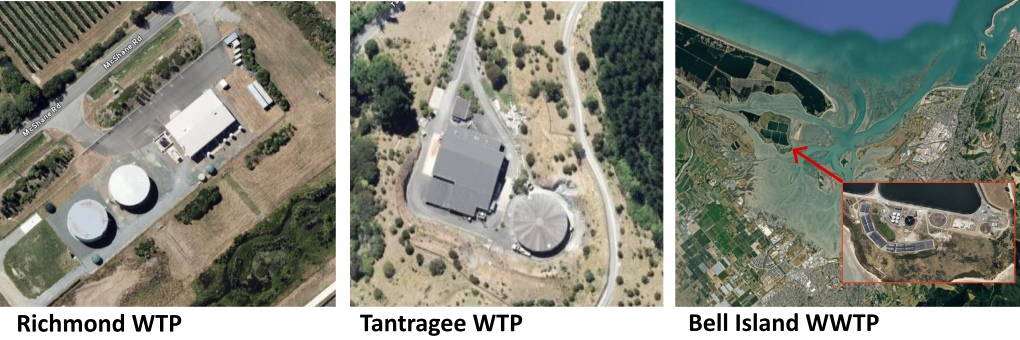
The Tantragee Water Treatment Plant does the actual heavy lifting of making river water drinkable. It uses ultra-filtration, which is fancier than it sounds but essentially means very good straining, followed by chlorination because some traditions never go out of style.
Over in Richmond, the water treatment setup demonstrates the "if it ain't broke, don't fix it, but if it is broke, build a new one" approach. The Waimea Water Treatment Plant has been handling water from the Waimea bores, dealing with the usual groundwater challenges like elevated nitrates in one source and corrosiveness in another. The solution involves blending, UV treatment, chlorine disinfection, and pH correction with caustic soda – basically the greatest hits of water treatment technology.
Not to be outdone, Tasman District Council built a shiny new Richmond Water Treatment Plant on the corner of McShane Road and Lower Queen Street. This facility takes water from both Waimea and Richmond bores and treats it with UV light and pH adjustment, plus a chlorine gas backup system for emergencies. Because in water treatment, redundancy isn't just good practice – it's what keeps you from getting angry phone calls at 3 AM.
Wastewater: The Less Glamorous Side
The Bell Island Wastewater Treatment Plant has been operating since 1983, making it officially middle-aged in infrastructure terms. It had the usual series of upgrades as environmental standards evolved and the population grew. The plant serves parts of Nelson City, chunks of Tasman District, and several industrial customers who produce more interesting wastewater than your average household.
The treatment process includes all the classics: primary sedimentation, secondary treatment with ponds (because this is New Zealand and we like our oxidation ponds), and UV disinfection at the end because nobody wants to swim in Tasman Bay with poorly treated effluent.
Meanwhile, the Nelson Wastewater Treatment Plant (or Nelson North WWTP if you prefer geographic precision) handles the other half of Nelson City's wastewater story. Located at the northern end of Nelson Haven, it takes care of central and northern Nelson's effluent – basically everything from the CBD, residential areas, and some industrial operations that produce more interesting wastewater than your average household. The plant has evolved from the "pipe it straight to the bay" approach of the 1970s to a proper 26-hectare oxidation pond system established in 1979, with subsequent upgrades that added screening, grit removal, primary sedimentation, trickling filters, and secondary clarifiers. It even has a bio-filter for odour control, because nobody wants their wastewater treatment plant to announce its presence to the entire neighborhood. The sludge gets trucked over to Bell Island for further processing, completing the regional sludge shuttle service.
Operational Reality Check
Here's where it gets interesting from an operations perspective: everything is connected, but not always in obvious ways. Nelson's northern suburbs send their wastewater to the city's own treatment plant, while the southern areas connect to the regional scheme. Sludge from the city plant gets trucked across to Bell Island because apparently even wastewater needs to travel.
The region runs about 135 pump stations across all networks, because gravity alone won't move water uphill, despite what some ratepayers seem to believe. These pump stations have backup power, backup pumps, and backup plans for when the first two backups don't work.
What This Means for Your Visit
The water coming out of your hotel tap has traveled from mountain rivers through modern treatment facilities operated by people who probably know more about membrane filtration than you or me (or maybe just more than me). The wastewater from the conference venue connects to a system that's been working reliably for decades, which is exactly as exciting as it sounds but considerably more important than most people realize.
If you're the type who enjoys infrastructure tourism (and let's face it, you probably are), you'll appreciate that this region demonstrates how multiple councils can actually work together on shared services without everything falling apart.
Why We're Here
As locals in the asset management business, we see the daily reality of keeping these systems running. That's why Trakk Assets is sponsoring WIOG 2025 – we understand the challenges of managing complex infrastructure networks where different organizations need to coordinate, where assets have different lifecycles, and where operational teams need reliable information to make good decisions.
Come find us at our exhibition stand. We'll have the usual conference swag, some local insights about Nelson, and actual conversations about asset management without the marketing fluff. We might even tell you where to get the best coffee in town, because that's the kind of practical information that actually matters.
The Bottom Line
Nelson's water infrastructure isn't going to win awards for innovation, but it works reliably for about 100,000 people and various industrial operations. It's managed by competent professionals who deal with the same challenges you face: aging assets, environmental compliance, growing demand, and ratepayers who only notice water services when something goes wrong.
Which, let's be honest, is probably exactly how it should be.
Welcome to Nelson, and welcome to WIOG 2025.
Trakk Assets is sponsoring WIOG 2025 because we work with councils and operators who manage exactly these kinds of systems every day. Visit our stand for honest conversations about asset management, local recommendations, and some local know how/where.
